Olive and Orchid
Complementary color combination with 1.28:1 contrast ratio
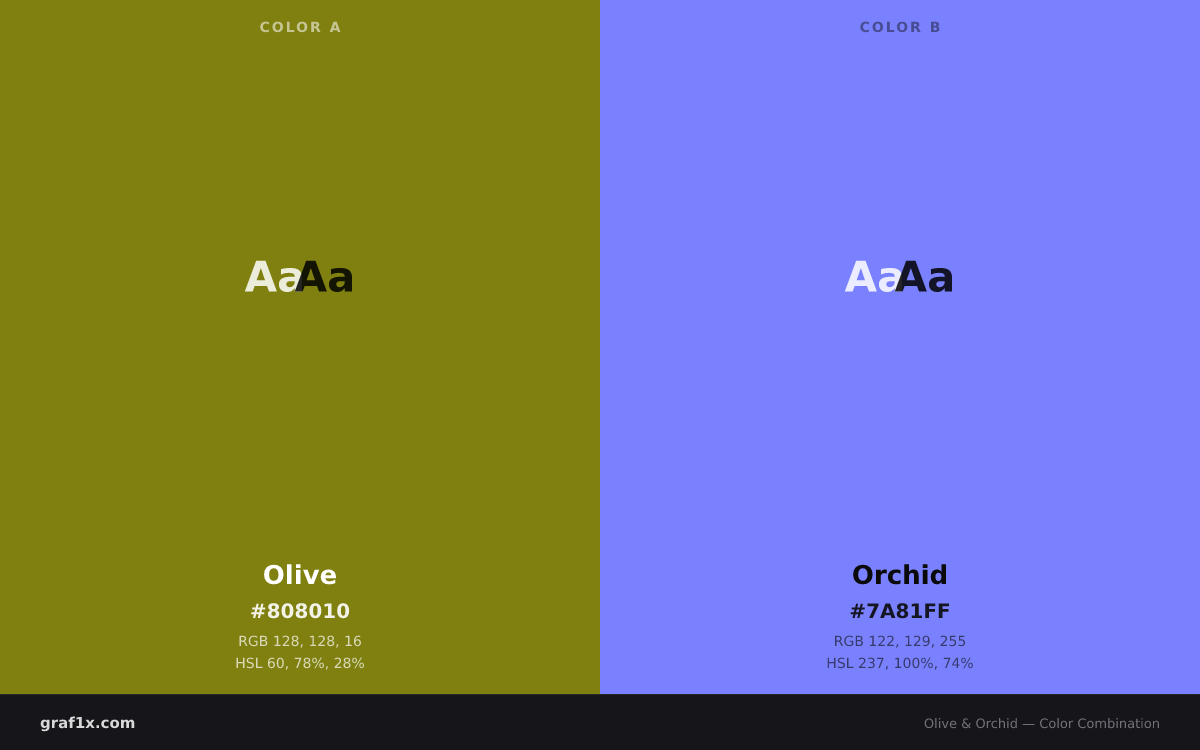
Color Values
#808010128, 128, 1660, 78%, 28%#7A81FF122, 129, 255237, 100%, 74%Harmony: Complementary
These colors sit opposite each other on the wheel, producing maximum visual contrast. Complementary pairings are vibrant and attention-grabbing, but a 70/30 split keeps them from shouting.
The hue angle between Olive and Orchid is 177 degrees. You can explore these relationships interactively in our Color Wheel Tool.
WCAG Contrast
UI Preview
Olive surface
Sample text on a olive background demonstrates readability and visual hierarchy.
Orchid surface
Sample text on a orchid background demonstrates readability and visual hierarchy.
Design Tokens
CSS Variables
:root {
  --color-a: #808010;
  --color-b: #7A81FF;
  --color-a-rgb: 128, 128, 16;
  --color-b-rgb: 122, 129, 255;
}
JSON
{
  "name": "Olive and Orchid",
  "colors": [
    {
      "name": "Olive",
      "hex": "#808010",
      "rgb": [
        128,
        128,
        16
      ]
    },
    {
      "name": "Orchid",
      "hex": "#7A81FF",
      "rgb": [
        122,
        129,
        255
      ]
    }
  ],
  "harmony": "Complementary",
  "contrastRatio": 1.28
}
Related Combinations
Frequently Asked Questions
Do olive and orchid go together?
Yes. Olive and Orchid form a complementary color combination. These colors sit opposite each other on the wheel, producing maximum visual contrast. Complementary pairings are vibrant and attention-grabbing, but a 70/30 split keeps them from shouting. The pairing has a WCAG contrast ratio of 1.28:1, which is below the AA threshold for text — use it for decorative purposes rather than text readability.
What is the contrast ratio between olive and orchid?
The WCAG 2.1 contrast ratio between Olive (#808010) and Orchid (#7A81FF) is 1.28:1. This ratio is below AA. Use the pairing for backgrounds, borders, and decorative elements rather than text-on-background combinations.
How do I use olive and orchid in design?
A safe starting point is the 60/30/10 rule: give one color about 60 percent of the surface area, the other about 30 percent, and reserve the remaining 10 percent for an accent or neutral. Since these are complementary colors, lean toward a 70/25/5 split to keep the contrast from becoming overwhelming. Test the result with our Contrast Checker if text is involved.
What are the hex and RGB values for olive and orchid?
Olive has the hex code #808010 and RGB values rgb(128, 128, 16). Orchid has the hex code #7A81FF and RGB values rgb(122, 129, 255). You can copy these directly into CSS or use the design tokens provided on this page.