Color Mixing Guide for Artists and Designers
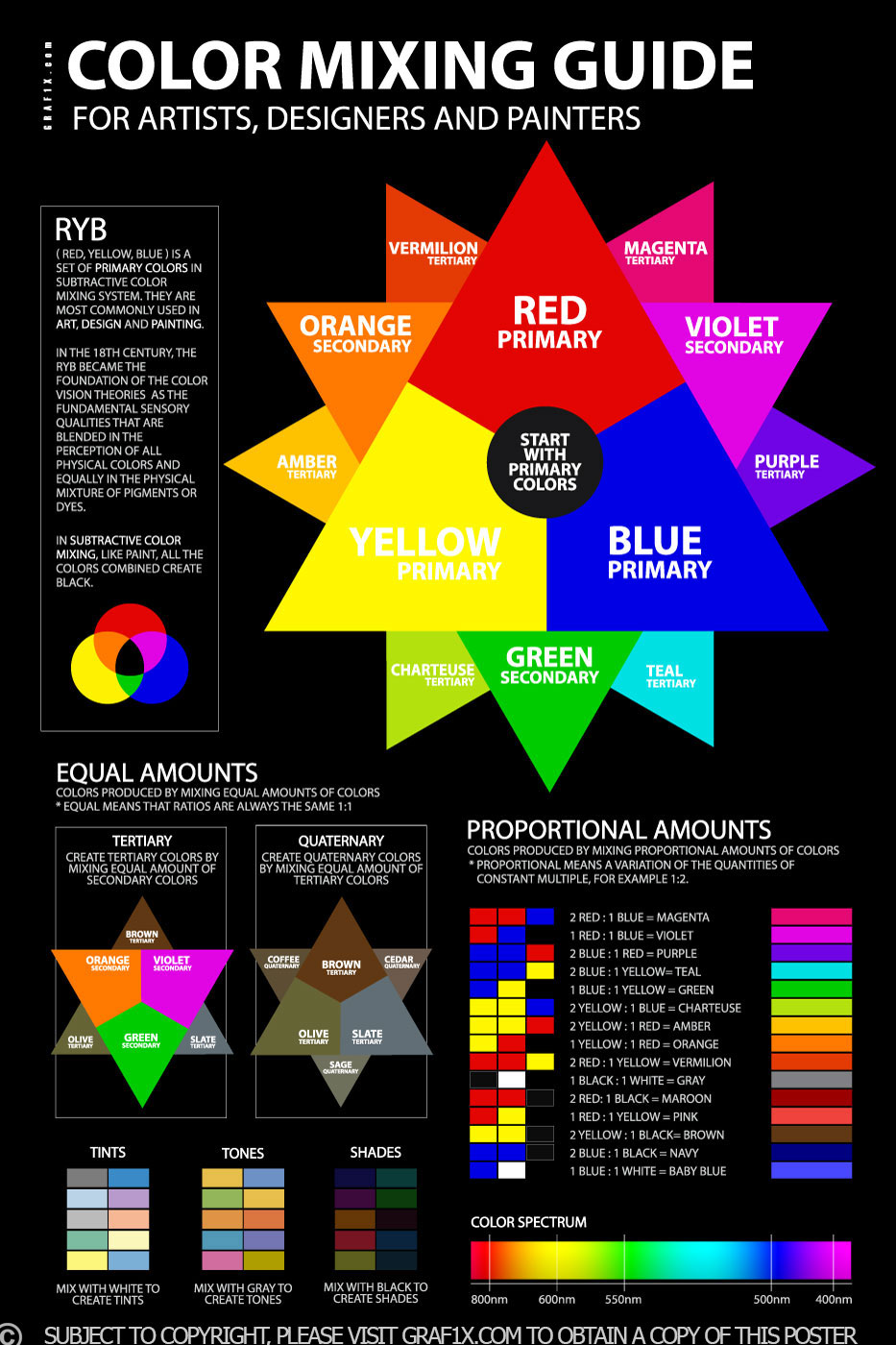
Every painter hits the same wall sooner or later. You squeeze out blue and yellow, mix, and get something muddy instead of the green in your head. This chart exists so you can skip that guessing game. Each row starts from a primary color and walks it across even steps into everything it can become.
There are two systems on here. One side follows RYB mixing, the kind your paints actually do. The other shows RGB, which is how screens combine light. Having both in one place settles classroom arguments and saves mistakes in client work. We also built a free Color Mixer tool that does the same job interactively, if you'd rather drag a slider than study a chart.
What's on the poster
- ✓Blend rows from each primary into its secondaries, in even steps
- ✓Paint results (RYB) shown next to screen results (RGB)
- ✓Swatches big enough to read from across a room
- ✓Shows where browns come from, not just the pretty mixes
- ✓Fits standard poster frames, no custom framing needed
Perfect for
About the print edition
- ·Printed on 120# satin stock with a low-glare finish
- ·Color accuracy checked before every print run
- ·Standard dimensions that fit ready-made frames
Printed copies are on pause while we sort out a new print partner. Everything on these charts is free to explore in the tools and articles on this site.
Frequently Asked Questions
What's the difference between the RYB and RGB sides?
RYB is what happens when you mix actual pigments. Combining paints absorbs more light, so mixes get darker, and red plus blue gives purple. RGB is how screens work, adding light together, so the same two colors give magenta instead. Both systems are printed side by side so you can compare them directly.
Does it show how to make brown?
Yes, deliberately. Browns happen where complements start cancelling each other out, and knowing where that line sits is half of practical mixing. To experiment past the chart, the RYB mixer on this site blends any pair at any ratio you like.
Will it match my paints exactly?
Not perfectly, and no printed chart can. Pigments vary quite a bit between brands. What the chart gets right is the logic: which direction a mix travels, where the halfway point falls, and when things turn muddy.
Tags
Educational Poster
This poster is part of our collection of color theory educational wall art.
Browse all posters →